The US Open paid a record $108m. Players still want a bigger share.
In 2026 the US Open raised total player compensation to $108 million, up 20% in a year. First-round losers still took home $140,000. Players welcomed the money and kept asking for a formal share of Grand Slam revenue. Here's why both can be true, and what remains unsettled.
 Deal
A record cheque. An unfinished argument.
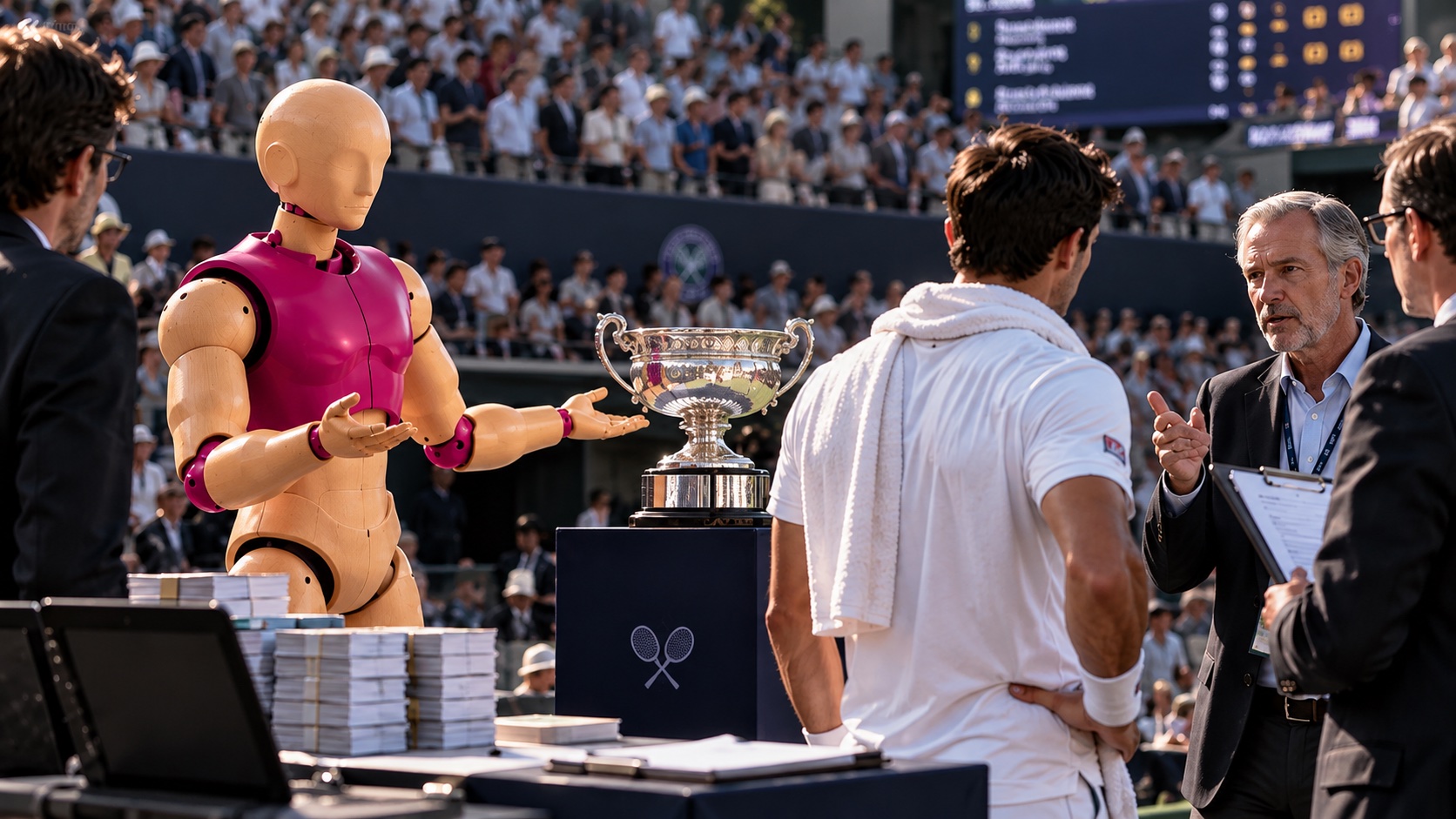
The US Open just paid more money to players than any Grand Slam in history. The players still want more.
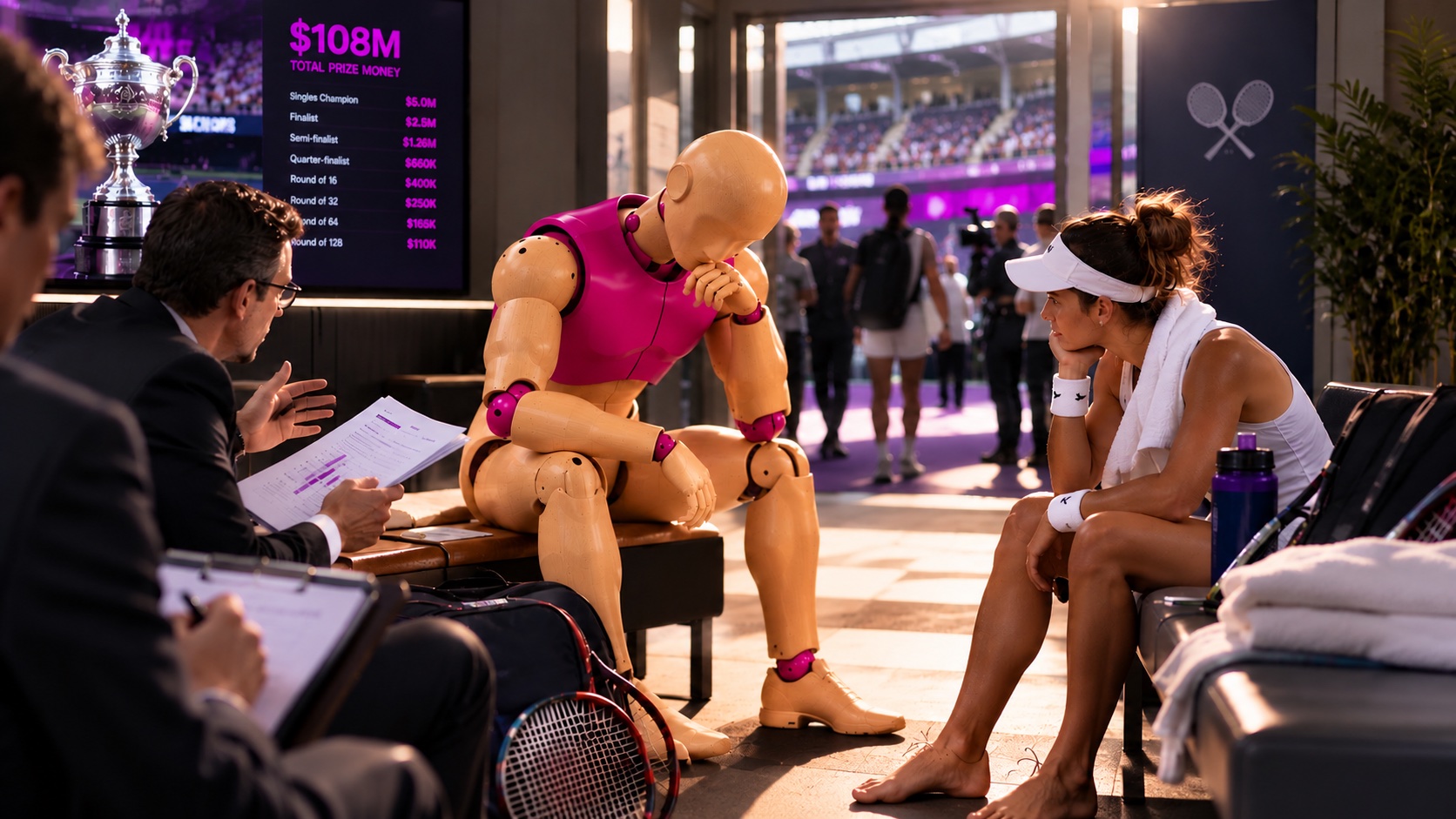
In 2026, total player compensation reached $108 million, up 20% on the previous year. Singles champions received $5.5 million each. Losing in the first round of singles paid $140,000.
So why is tennis still arguing about money?
Because the argument is not only about the size of this year's cheque. It is about who decides how big the cheque should be when the tournament's business grows.
What $140,000 for a first-round loss actually means
$140,000 for losing one tennis match sounds extraordinary. For many players it is closer to operating capital.
Professional tennis players are not salaried employees. Travel, coaching, physio and lodging come out of what they earn. Mackenzie McDonald, speaking to The Guardian around the 2026 US Open, called the Grand Slams "the engine that enables them to make a living" and described the gap between putting food on the table and making a living for players who show up hurt because the bills still arrive.
That is why a player can welcome a record purse and still support structural reform. The early-round cheque matters. So does whether next year's cheque is tied to the tournament's success by agreement, or only by organiser discretion.
How large is $108 million relative to the US Open business? The latest audited United States Tennis Association (USTA) accounts cited here are from 2024. They show US Open operating revenue of $559.658 million and player compensation of $76.349 million, about 13.6% by our calculation. The 2024 figures cannot tell us the 2026 percentage, because audited 2026 revenue is not in the evidence used for this piece. The purse headline and the audited share are related stories, not one invented ratio.
 Deal
A bigger purse is not the same as a revenue-share formula
The real disagreement sits behind the percentages.
An organiser can decide to raise prize money. That is what a rising purse is: a discretionary increase. A revenue-sharing formula is different. It links player compensation to the tournament's revenue by an agreed mechanism, so the share moves when tickets, television and sponsors grow.
Players have been arguing for that structural link, not only for a larger one-off pot. Roughly 15% often appears in player-side descriptions of current Slam prize-to-revenue maths. The demand around 22% is commonly tied to the combined ATP and WTA (the men's and women's pro tennis tours) 1000-level events, as a comparison point for what those tours already pay relative to revenue. Neither figure is a line printed in the US Open accounts; both are advocacy benchmarks in the negotiation.
The next announcement that would change the argument is not simply another bigger cheque. Watch for an agreed rule for how the business funds the athletes.
 Deal
What players already won in 2026
The 2026 package was not empty symbolism.
Compensation rose 20%. Lower-round singles pay rose sharply, with first-round money at $140,000. The USTA put $2 million into a player-support programme aimed at mid-career and retirement transitions, money players had been pressing the Slams to fund. The four Grand Slams also announced a Grand Slam Player Council to open a direct channel on sporting matters after the US Open.
Players have already won concessions: more money, some welfare funding and a new consultative body. They have not yet won a formal revenue-sharing formula. Both halves of that sentence matter.
What a record purse still does not settle
A record purse does not end the share-of-revenue fight. Player statements around the announcement kept that door open: welcome the money, keep pressing for a formula.
Media-day limits and protest talk show pressure. They do not print a final percentage, and they do not turn a discretionary raise into a structural settlement.
Who decides how the business grows into player pay?
Players want a predictable relationship between the tournament's commercial success and their compensation. For many outside the very top of the rankings, Slam weeks are where the season's finances are made or broken.
The Slams point to rising purses, separate business structures from tour events, and now a player council plus support funding as evidence they are moving. A larger cheque every August is real. So is the absence, so far, of an agreed formula that would make that cheque scale automatically with revenue.
The credible tension is not "greedy players versus generous tournaments". It is progress on pay and representation without a settled rule for sharing growth.
What remains unresolved
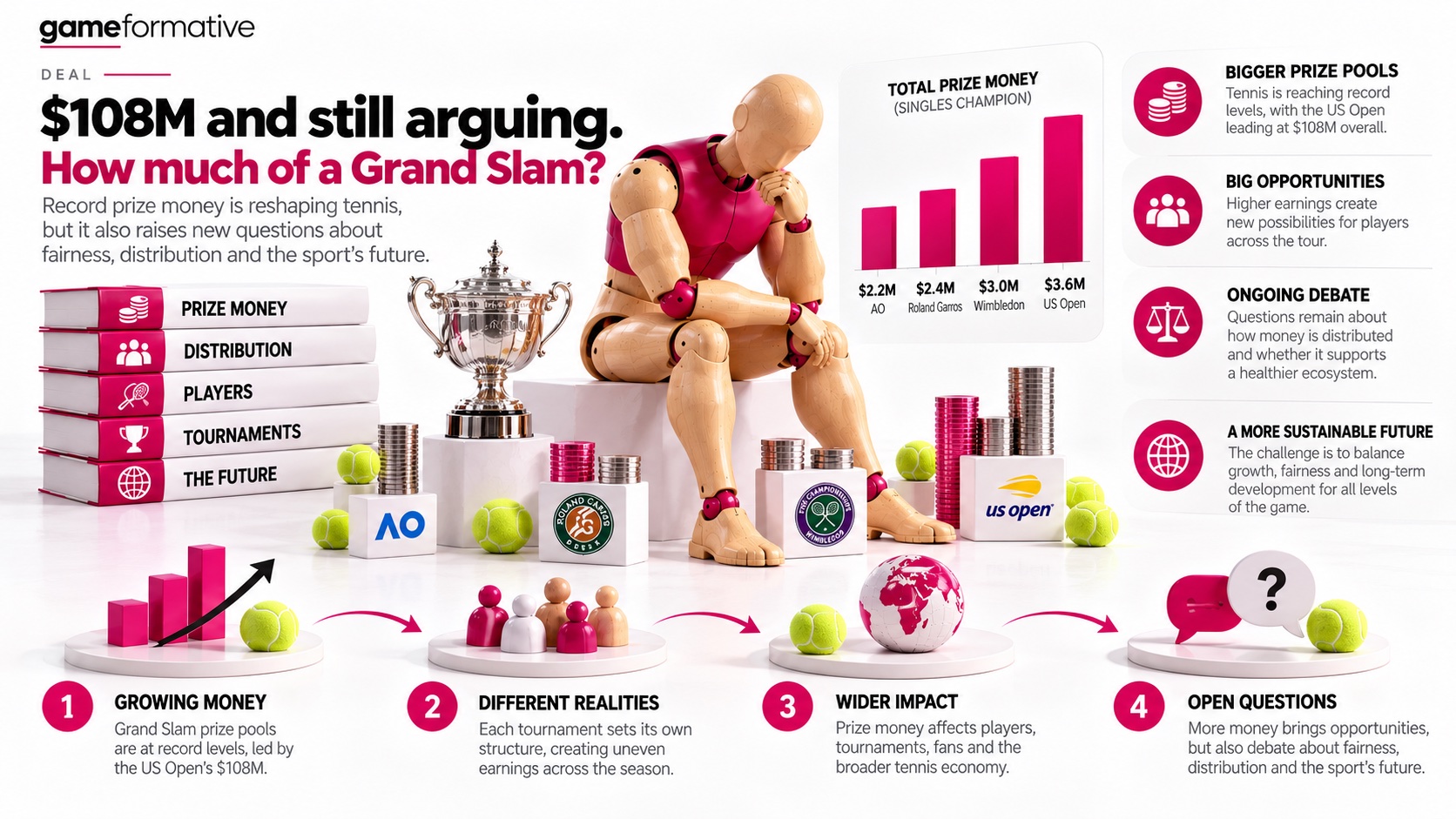
The $108 million matters. So does the 20% increase. Neither settles the argument.
The next fight is not simply over how much the Grand Slams pay in a given year. It is over whether players should have a guaranteed share of what the Grand Slams earn when the business grows.
Research record
Receipts for this article: sources, image provenance, and material we opened but did not rely on.
Mentioned entities
Sources used
- USTA and Affiliates Consolidated Financial Statements (2024/2023) · USTA · Audited federation accounts for US Open economics
- U.S. Open announces record $108-million prize purse · Reuters (syndicated) · Wire report of the purse headline; independent of USTA PDFs
- The Championships, Wimbledon 2026 – Prize Money · AELTC · Cross-Slam comparator from a different federation house
- US Open 2026 to offer biggest prize fund in Grand Slam history with $108 million on offer · BBC Sport · Record $108m package (+20%); first-round $140,000; $2m welfare/support contribution; four Slams announce Grand Slam Player Council
- US Open purse to top $100 mn as Grand Slams form player council · AFP / France 24 · Confirms $108m total compensation, $5.5m singles champions, $140,000 first round, $2m Player Support Program, council launch after US Open
- Grand slams are the engine to make a living: Mackenzie McDonald on why players still compete when injured · The Guardian · Named-player context: Slams as financial engine; costs of coach/physio/team; why early-round Slam money matters outside the elite
Image credits
- Headline: Grand Slam trophy and the argument. GameFormative editorial desk. Licence: Original GameFormative editorial illustration (free to use with this article; © GameFormative 2026).
- Inline: Slam accounts office. GameFormative editorial desk. Licence: Original GameFormative editorial illustration (free to use with this article; © GameFormative 2026).
- Inline: $108m prize-money lounge. GameFormative editorial desk. Licence: Original GameFormative editorial illustration (free to use with this article; © GameFormative 2026).
- Infographic: $108m and still arguing. GameFormative editorial desk. Licence: Original GameFormative editorial illustration (free to use with this article; © GameFormative 2026).
Sources investigated but not used
- Reviewed but not used · French Open players plan media protest on prize money · ESPN/AP
- Unavailable: not relied upon · US Open official site purse page · US Open