Still winning in the 70th minute. Still losing the night.
Five substitutes are permanent. A 48-team World Cup adds matches, heat and travel. Peter Krustrup's blunt take: you need about 18 to 20 players who can really play the tournament, not one shiny starting eleven and a quiet bench. Here's what that changes before the first whistle.
 Design
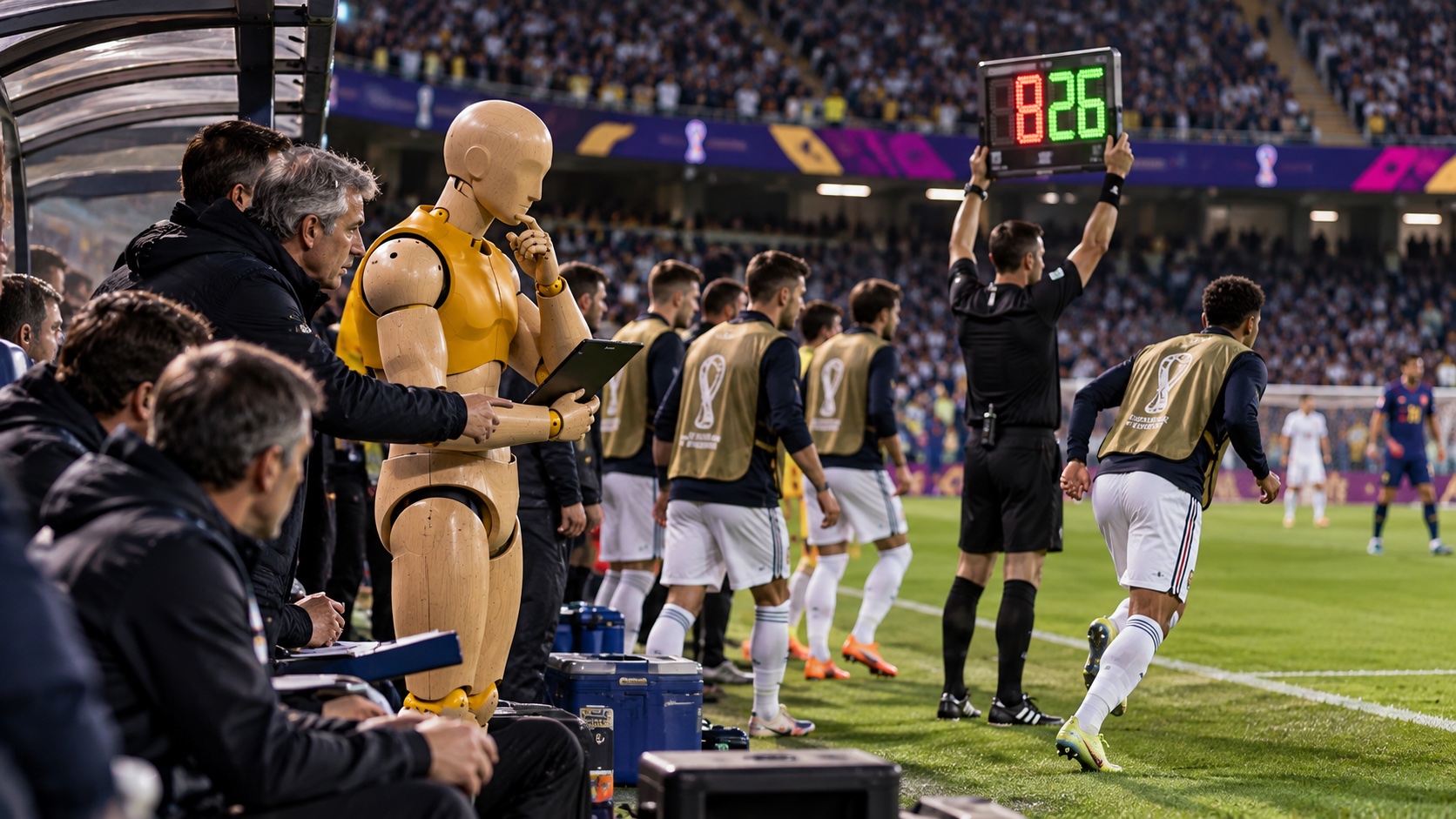
The other bench comes on fresh
Your best 11 are still winning in the 70th minute. Then the other bench comes on fresh, the pace jumps, and you have nobody left who can match it.
That used to sound like a coaching mistake in the last twenty minutes. Under today's rules it is often a squad-design mistake made weeks earlier.
It is not only a thought experiment. In the 2022 World Cup quarter-final in Qatar, Croatia were heading out against Brazil in extra time until Bruno Petković, introduced from the bench, scored the equaliser that forced penalties. One change did not invent Croatia's tournament. It did show what a usable substitute can still do when the first wave is spent and the match is not finished.
Five changes a game are now permanent. A 48-team World Cup means more matches, more heat, more travel. The question is no longer whether the bench can matter. It is whether a squad has enough players who can matter without the team falling off.
How five substitutes rewrote the World Cup bench
For years the World Cup bench was mostly insurance. Three changes. Cover an injury. Chase a late goal. The starting eleven was the real team.
Then the International Football Association Board (IFAB), which writes football's Laws of the Game, made five substitutes the normal option for top football, still inside three stoppage windows plus half-time, with up to 15 names on the team sheet. The 2022 and 2026 World Cups run that five-change script in normal time, plus one more if the game goes long.
Peter Krustrup at the University of Southern Denmark (SDU) states the squad consequence directly: you need about 18 to 20 players who can really play the tournament, not one outstanding starting eleven and a quiet bench. His work on the five-sub era emphasises late-game intensity: fresh players can raise sprint work when starters fade, and that compounds across a long competition.
Aspetar's World Cup readiness note adds the limit those players face before they even reach the touchline. They arrive from different clubs with different minutes, recovery and niggles. Treat them as one training group in week one and you can lose the backup you needed most for the knockout round.
The rule created more changes. It did not automatically create more players who can use them.
 Design
What kind of 18 to 20 a squad actually needs
Once that 18-to-20 idea is clear, the useful questions get more specific.
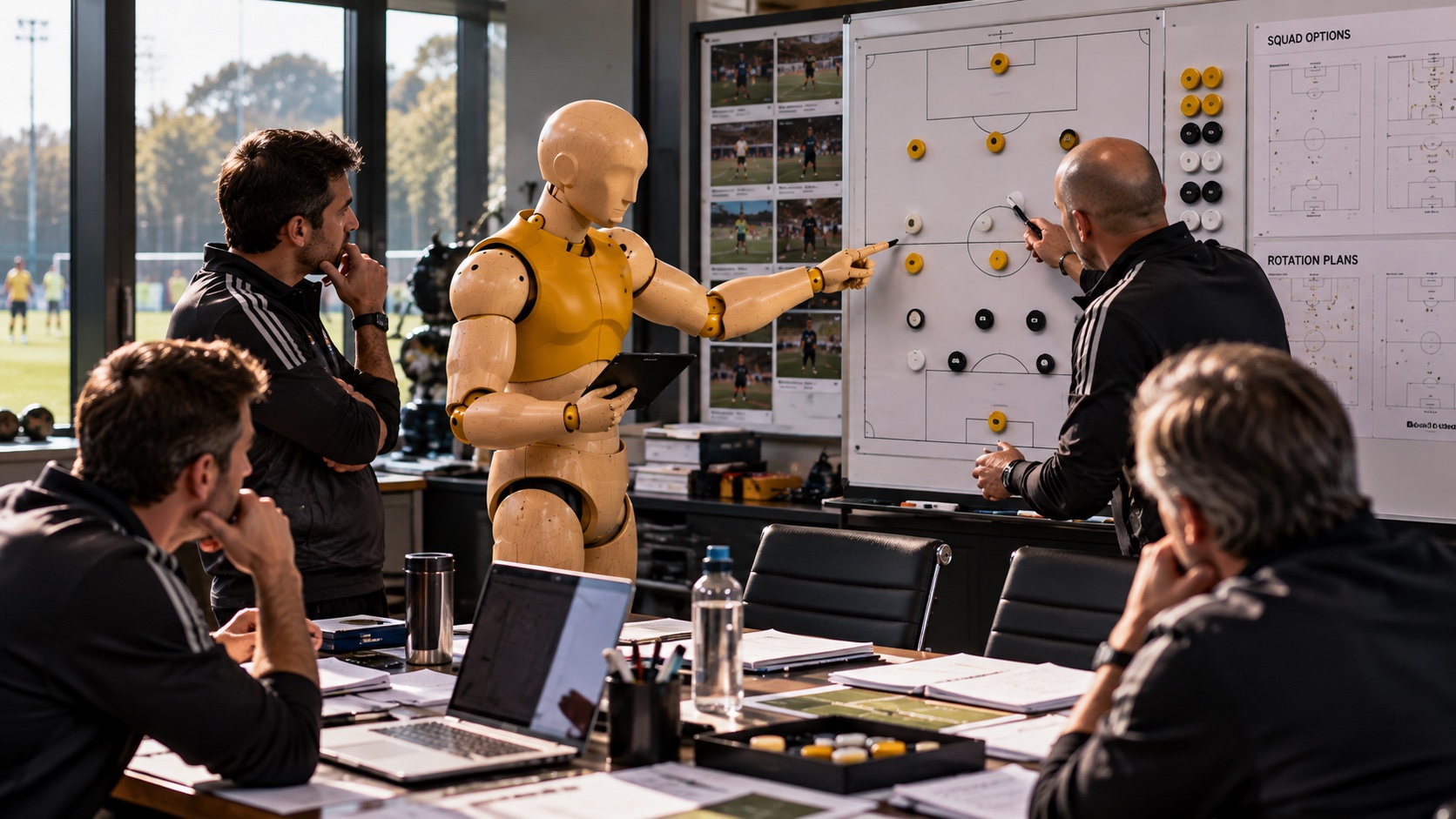
What kind of 18? A pile of attacking alternates is not the same as cover across the pitch. Centre-back and full-back redundancy matter because one red card or one knock in minute 35 can force the wrong player into the wrong job. Versatile defenders and midfielders who can cover two roles often earn a squad place precisely because five changes make those emergency reshuffles more common, not less.
How should the starting XI change when you know you can replace almost half the outfield team? Some coaches will protect high-minute stars and plan early like-for-like changes to keep the level. Others will start a press-heavy group and use later substitutes to change the tactical problem. Either way, selection night is no longer only about who is best for the first hour. It is also about who can finish the night and who must be saved for Friday.
Extra time raises the same issue again. A fourth and fifth change, plus the extra allowance if the match runs long, rewards players who can still sprint and decide after 100 minutes. A 48-team tournament increases the number of those nights and the travel between them.
How to start reading a published squad list under these rules is simple: ignore the glamour of the first eleven for a moment and ask what happens when three of them leave the pitch.
 Design
What changes on the touchline
The touchline detail still matters. A double change burns one of the three stoppage windows, not two. Waste a window early and you have fewer tools when the other bench empties later.
Lead and chase plans are different. Protecting a one-goal lead often wants like-for-like freshness. Chasing a game may want a second striker or a wide runner. Writing those two shapes before kick-off is ordinary match preparation; five substitutes simply make the second and third wave more important.
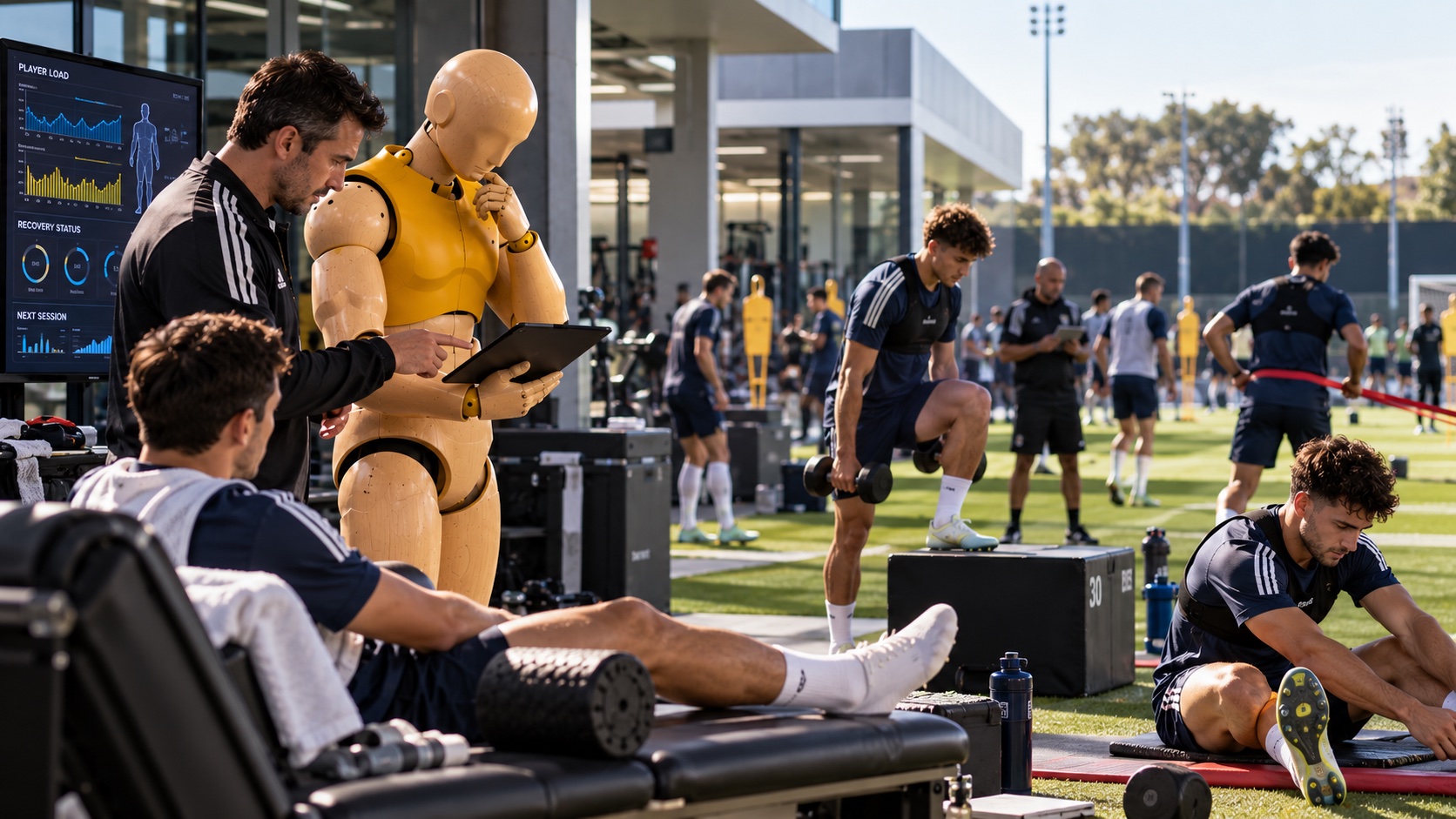
Aspetar's availability point belongs here too. A change that helps Tuesday and costs a starter for Friday is a bad tournament decision even when it looks clever in isolation. Heat, altitude and travel make that trade sharper in 2026 than in a short European season.
Squad choices that still belong to the three-sub era
Squads that stockpile star attackers and leave centre-back one deep still look like three-sub thinking. The ugly emergencies did not disappear when IFAB added two more changes.
Camp weeks that train everyone the same way, despite different club seasons, will keep breaking the wrong people. High-minute club starters often need freshness. Call-ups who barely played need match work before knockout minutes. Those are different problems.
Krustrup's 18-to-20 argument also suggests that traditional squad comparisons built mainly around the strongest XI may miss an increasingly important variable for 2026: how much quality remains in positions 12 to 18. That is GameFormative's reading of the implication, not a separate study result.
Five substitutes are also not a licence to start someone who is already half broken. Extra changes do not create fitness that was never there.
Welfare, late-game fitness and availability
IFAB framed five substitutes as player welfare and better games, not a temporary pandemic patch. More changes were meant to protect players and keep matches alive late.
Krustrup's line of work answers a different question: if late games are decided by intensity, do you have enough players who can raise that intensity without the team dropping?
Aspetar answers a third: even a deep-looking list fails if those players are not available after heat, altitude, travel and uneven club loads.
A federation can celebrate the welfare rule and still name a squad that only has eleven players who can truly change a match. The useful argument is whether the named list can deliver what the rule allows and what late games demand.
If you're naming a tournament squad
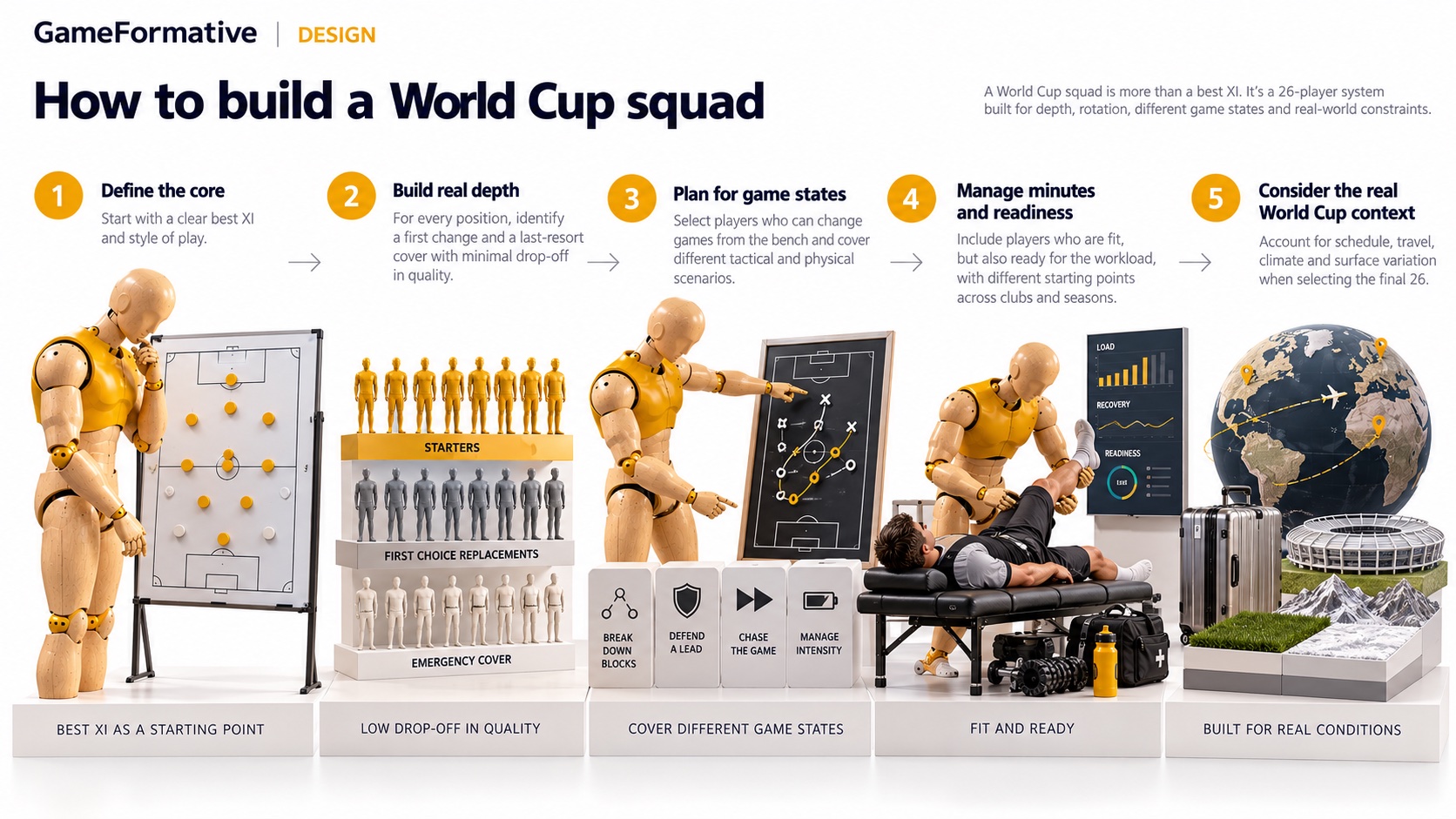
If you're naming a tournament squad, three questions are enough:
- When a starter comes off, does the level hold?
- Who covers the ugly emergencies (red card, centre-back, minute 35)?
- Who is fit enough for Friday after Tuesday's minutes?
Build the 18 who can change a match without weakening it. Then pick the 11 who start.
Research record
Receipts for this article: sources, image provenance, and material we opened but did not rely on.
Mentioned entities
Products, brands, services and organisations named in this piece. Listed for clarity: this is not a sales offer. Try claims with a pinch of salt and compare other solutions.
- IFAB · organisation
- University of Southern Denmark (SDU) · organisation
- Aspetar · organisation
Sources used
- World Cups are no longer won by the best 11 players · University of Southern Denmark (SDU) · Primary seed: Krustrup on five-sub era, intensity, and need for 18–20 outstanding tournament players (9 June 2026)
- The IFAB permanently approves five-substitute option in top-level competitions · FIFA / The IFAB · Primary rule change: five-sub option permanent in Laws of the Game 2022/23; three windows + half-time; up to 15 named substitutes
- Optimising player readiness for the FIFA World Cup 2026 · Aspetar Sports Medicine Journal · Club-to-country transition, fit vs load-ready, availability as asset, environmental and rotation tools for 2026
- Squad Depth and the Five-Sub Era at World Cup 2026 · SoccerAnalytics · Independent analytics frame: drop-off, positional cover, rotation viability under five subs + longer bracket + heat/altitude
- Brazil 1-1 Croatia (aet, 2-4 on pens): World Cup 2022 quarter-final · BBC Sport · Match illustration: Bruno Petković equaliser as a substitute in extra time; used to show a usable bench player changing a World Cup knockout night in the five-sub era
Image credits
- Headline: World Cup touchline squad decisions. GameFormative editorial desk. Licence: Original GameFormative editorial illustration (free to use with this article; © GameFormative 2026).
- Inline: squad options and rotation plans. GameFormative editorial desk. Licence: Original GameFormative editorial illustration (free to use with this article; © GameFormative 2026).
- Inline: load, recovery and readiness. GameFormative editorial desk. Licence: Original GameFormative editorial illustration (free to use with this article; © GameFormative 2026).
- Infographic: how to build a World Cup squad. GameFormative editorial desk. Licence: Original GameFormative editorial illustration (free to use with this article; © GameFormative 2026).
Sources investigated but not used
- Reviewed but not used · World Cup substitutions | History and rule changes · FIFA
- Reviewed but not used · Can USMNT's depth at the 2026 World Cup make a difference? · ESPN
- Reviewed but not used · Free Soccer Squad Depth Chart Builder · DrawTactics