Two seconds to challenge the umpire. Catchers learned fastest.
MLB's first full season with automated ball-strike challenges produced an overturn rate near 54%. The more revealing number belongs to catchers: they won almost 59% of their challenges. Baseball's robot zone has not removed human judgement. It has created a new kind of it.
 Data
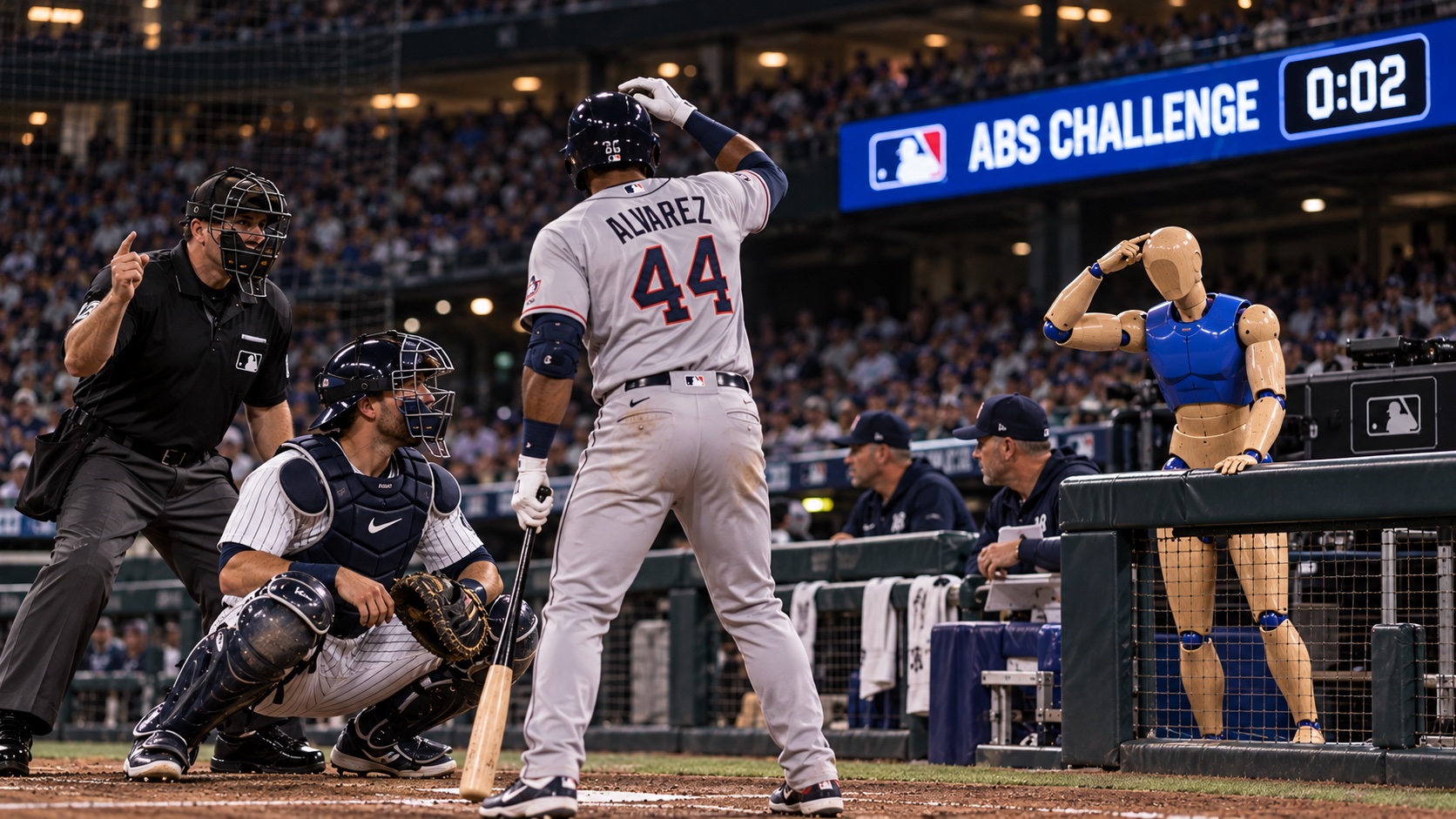
Tap the helmet. Two seconds. The zone answers.
Tap the helmet. Two seconds. The zone answers.
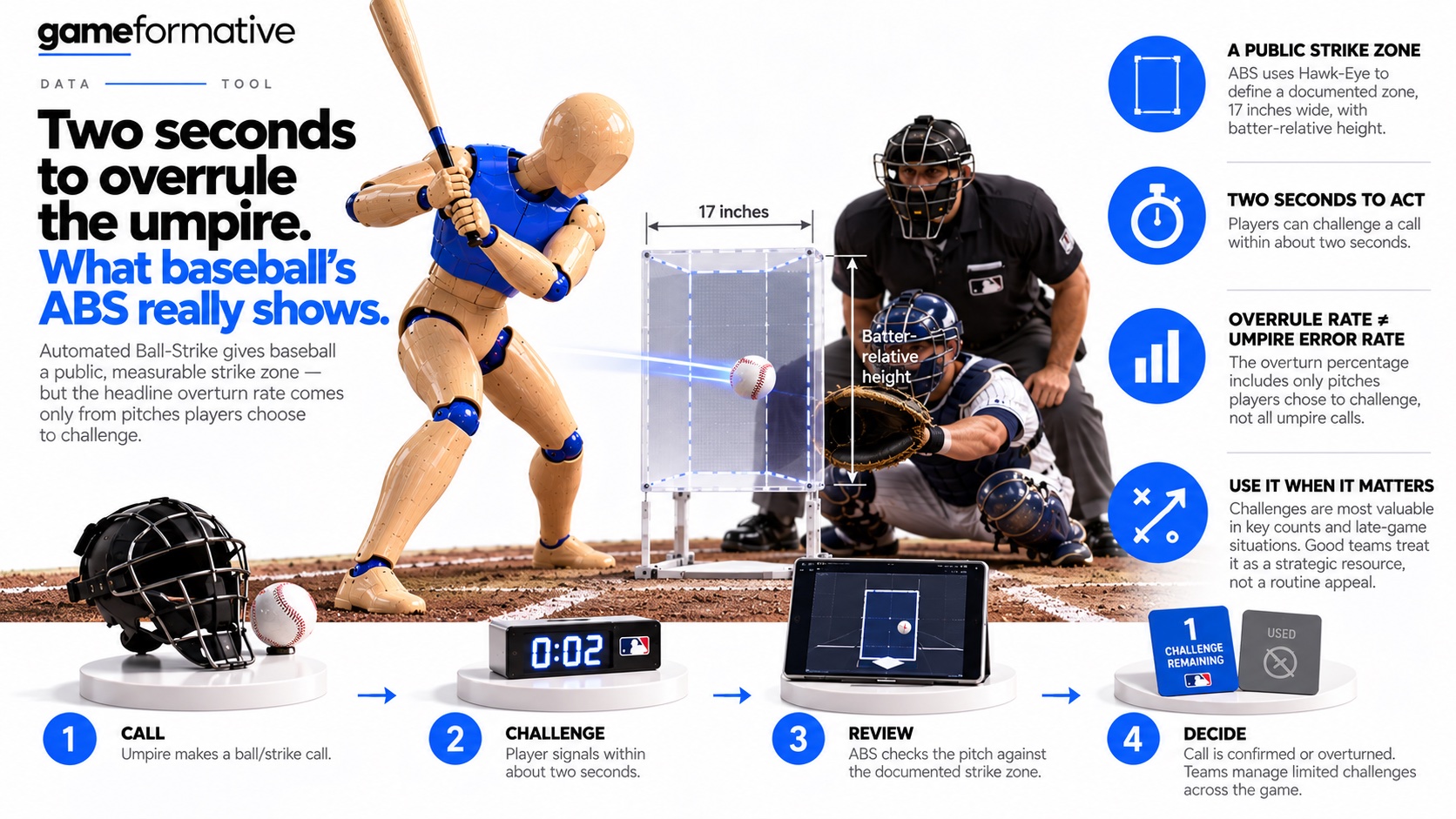
In 2026 Major League Baseball (MLB) kept the human umpire and added a limited veto. Batter, pitcher or catcher can ask for an Automated Ball-Strike (ABS) review. Each team starts with two challenges. Win one and you keep it. You have about two seconds to decide.
The camera draws a fixed zone. The player still has to know when to argue with it.
Players overturned roughly 54% of the calls they challenged this season, based on Baseball Savant 2026 regular-season challenge totals summed for this piece (fetched 26 September 2026: 5,598 overturns of 10,369 challenges). That does not mean umpires missed half their calls. Players challenge only a thin, highly selected group of pitches they suspect are wrong.
The more interesting question is who became good at deciding, in roughly two seconds, which calls were worth challenging?
Why catchers win the argument with the robot
Split the same Savant totals by role and a different story appears.
Catchers overturned about 58.7% of their challenges (3,234 of 5,507). Batters were about 49.0% (2,295 of 4,687). Pitchers were about 39.4% on a much smaller sample (69 of 175). Early MLB season reporting already showed catchers ahead of other challengers. A full-season aggregation keeps the same shape.
Why would catchers be better at arguing with a robot?
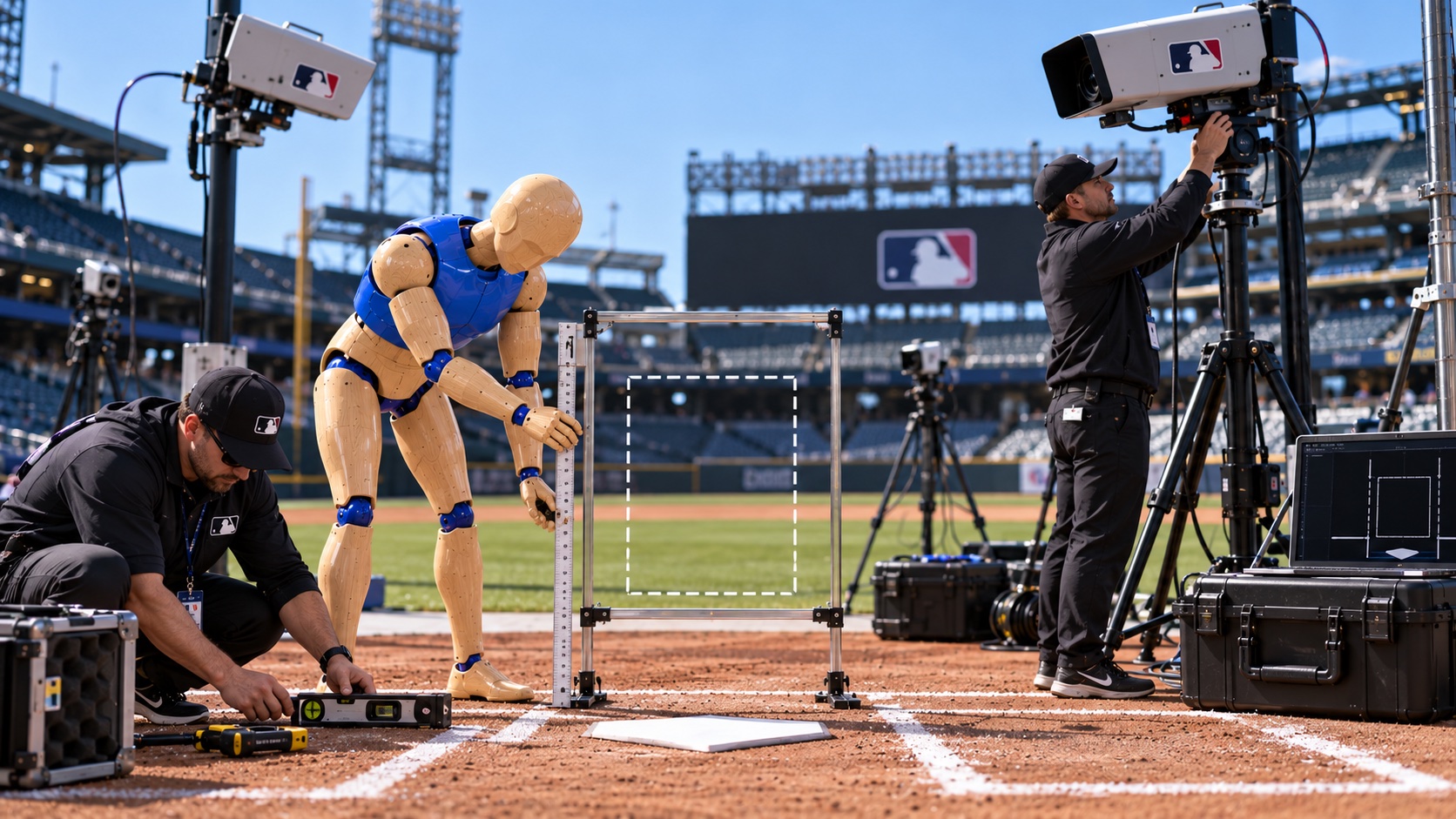
They stand closest to the edge of the zone. They see location from directly behind the plate, not from sixty feet away mid-swing. They watch hundreds of pitches a week and learn the machine's shape the way they once learned an umpire's. They also live inside count leverage: when a borderline pitch is worth burning a scarce challenge, and when it is not.
Those are plausible explanations, not a finished causal model. The data show a large gap. They do not print a single mechanism. Still, the gap is the discovery: technology that was meant to settle disputed calls also rewarded the player with the best real-time read of the zone.
 Data
Not every missed call is worth challenging
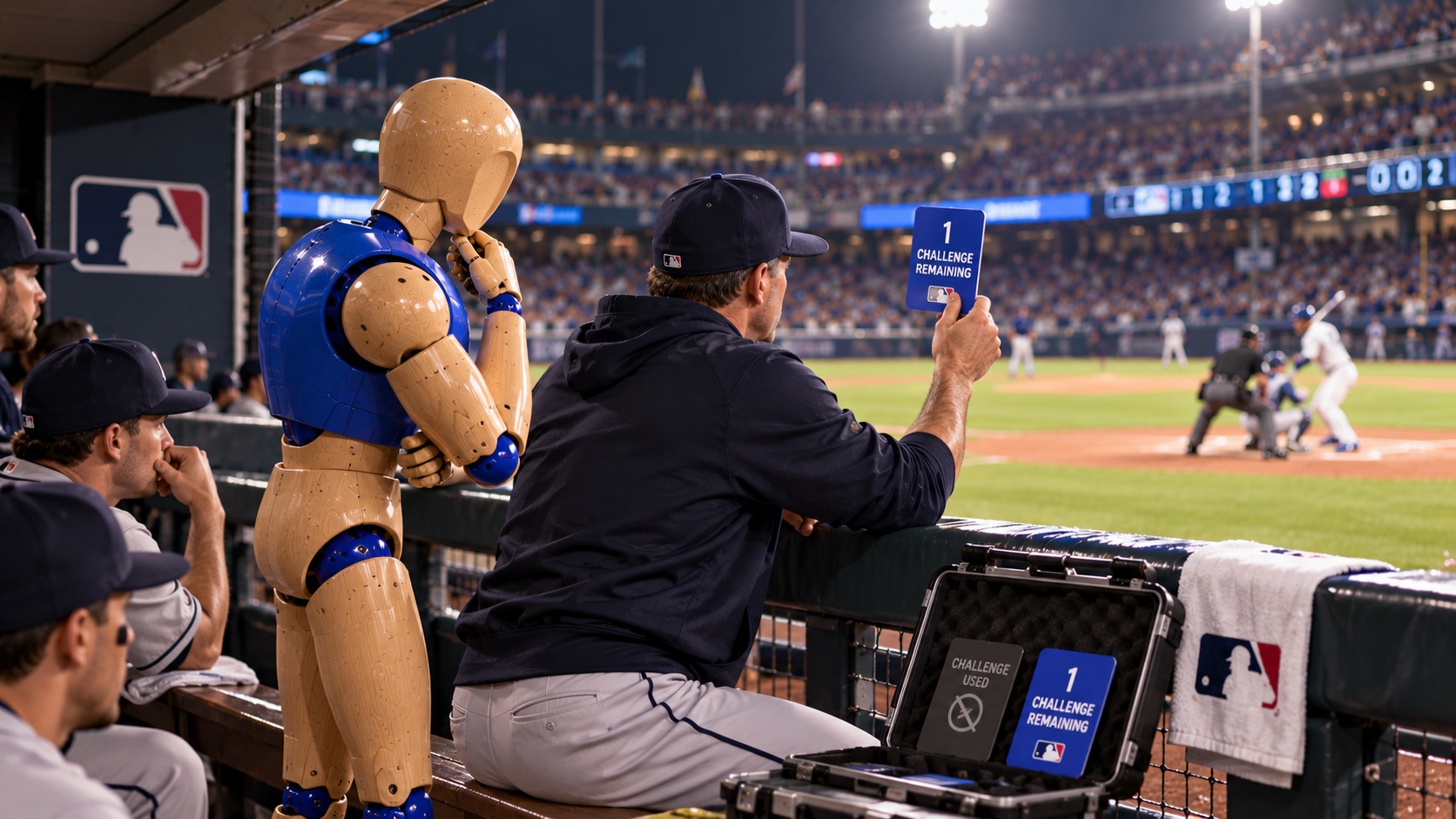
Bottom of the eighth. Two strikes. Runner in scoring position. One challenge left.
The umpire calls strike three. The batter thinks it is outside. Roughly two seconds remain. Tap the helmet, or walk back to the dugout?
MLB designed ABS as a scarce resource, not an unlimited appeals court. A full count swings run expectancy far more than a first-pitch ball or strike, which is why early MLB.com season notes stressed spending challenges where the count really hurts and keeping one in reserve late. Early-season reporting also noted plenty of challenges still going on first pitches. That tension is the strategy story.
Watch for how clubs treat the bank: whether catchers effectively control challenge decisions, whether pitchers should rarely initiate, and whether a 70% confidence call in the second inning is worth less than a lower-confidence full-count pitch in the eighth. The machine only appears when somebody challenges. Until then, the scarce resource is human judgement under a clock.
 Data
A hybrid: human call, player challenge, machine review
MLB did not simply replace umpires with computers.
It chose a hybrid: the umpire still makes the call, a player decides whether to challenge, and the machine resolves the dispute. League materials describe the system as a middle ground between full automated balls-and-strikes and traditional human umpiring.
That design keeps four layers of judgement in play. The umpire judges the pitch. The player judges the umpire. The club's challenge bank judges the game state. The ABS zone judges the challenge. Hawk-Eye locates the ball only after a human decides the argument is worth having.
The interesting innovation is not only that a camera can draw a strike zone. It is that baseball designed human judgement around machine judgement, and left both inside the same two-second window.
If framing matters less, challenge judgement may matter more
Baseball spent years developing catchers who could make borderline pitches look like strikes. Framing was partly about persuading the umpire.
ABS challenge judgement rewards a different catcher skill: recognising when the umpire's decision differs from the machine-defined zone.
ESPN's May 2026 cut, labelled as early-season, reported framing value among the top-30 framers down about 20%, and a walk rate of 9.4% described as the highest in more than 25 years. That is a shift worth watching. It does not, by itself, prove ABS caused a permanent decline in framing value.
Prefer the open question. If framing matters less, challenge judgement may matter more. Traditional framing sells the edge of a human zone. Challenge skill sells confidence about a published machine zone. Whether that transfer sticks through a full postseason sample is still unfinished business.
What clubs should ask about a new skill
Believers wanted the same zone in every park, every night, and a public way to correct obvious misses. Year one delivered that ledger. Sceptics wanted to know what scarce challenges would do to strategy and to the craft behind the plate.
Both sides can read the catcher gap. Clubs should ask practical questions the dashboard cannot answer alone: should challenge judgement become a trained skill, should catchers own more of the bank, and should thresholds change with count and outs?
One caution still matters for player rankings. Of 526 batters who challenged at least once in those Savant totals, 346 had fewer than ten attempts. Small samples make individual rankings unreliable. The role-level gap between catchers and pitchers is the sturdier finding.
Machine judgement did not replace human judgement. It redesigned it.
Baseball gave players two seconds to overrule an umpire and accidentally created a new competitive skill.
Year one settled the basic bargain: human call, limited challenge, machine review. Catchers learned that bargain fastest in the aggregates we have. What remains open is how clubs train the skill, how October leverage changes the bank, and whether framing value permanently yields ground to challenge judgement.
The robot zone did not remove human judgement from baseball. It redesigned where that judgement has to be fast, scarce and good.
Research record
Receipts for this article: sources, image provenance, and material we opened but did not rely on.
Mentioned entities
Products, brands, services and organisations named in this piece. Listed for clarity: this is not a sales offer. Try claims with a pinch of salt and compare other solutions.
- MLB · organisation
- ABS (Automated Ball-Strike) Challenge · product
Sources used
- ABS Challenge Dashboard · Baseball Savant / MLB · Primary Statcast dashboard for challenge and overturn totals
- ABS Challenge System results, what we have learned · MLB.com · League desk literacy on why overturn rate alone misleads
- MLB 2026: What we've learned so far about ABS · ESPN · Independent outlet on early framing-value and walk-rate cuts; date-stamp before citing
- Think you know who's been good at using ABS? It's not so simple · MLB.com (Mike Petriello) · Overturn rate as batting average of ABS metrics; early-season context; run-value framing
- Everything you need to know about the new ABS Challenge System · MLB.com (Anthony Castrovince) · Rules: two challenges, retained if won; ~2-second window; zone geometry
- ABS Challenges leaderboard · Baseball Savant / MLB · Primary 2026 regular-season challenge totals summed for this piece (fetched 26 Sep 2026)
Image credits
- Headline: two seconds to challenge. GameFormative editorial desk. Licence: Original GameFormative editorial illustration (free to use with this article; © GameFormative 2026).
- Inline: ABS strike-zone calibration. GameFormative editorial desk. Licence: Original GameFormative editorial illustration (free to use with this article; © GameFormative 2026).
- Inline: challenge remaining. GameFormative editorial desk. Licence: Original GameFormative editorial illustration (free to use with this article; © GameFormative 2026).
- Infographic: what ABS really shows. GameFormative editorial desk. Licence: Original GameFormative editorial illustration (free to use with this article; © GameFormative 2026).
Sources investigated but not used
- Reviewed but not used · MLB ABS challenge rankings: Best and worst of 2026 · ESPN
- Unavailable: not relied upon · 2026 MLB ABS Challenge Analysis · Baseball-Reference